Latest activity
-
Llouie1961 replied to the thread PBS on Debian.PBS defaults to ZFS out of the box, and a normal Debian install does not use ZFS. So there could be some work there. But this begs the question, why run PBS remotely? You don't need to do that, you just need to store the data remotely. Personally...
-
 gurubert replied to the thread Ceph network setup for Wan rbd replication.AFAIK RBD mirroring needs access to the public networks of both Ceph clusters.
 -
gurubert reacted to AndrwHmmr's post in the thread Was mache ich jetzt nach dem Update auf Ceph 20.2.4 with
 Like.
Wenn er das cephFS in die VMs mounted mit dem Kernel Client hat das sehr wohl was mit den VMs zu tun. Wenn der Kernel der VMs aes256k nicht unterstützt kann die insecure aes auth method nicht deaktivert werden. Das geht aus dem OP nicht ganz...
Like.
Wenn er das cephFS in die VMs mounted mit dem Kernel Client hat das sehr wohl was mit den VMs zu tun. Wenn der Kernel der VMs aes256k nicht unterstützt kann die insecure aes auth method nicht deaktivert werden. Das geht aus dem OP nicht ganz... -
gurubert reacted to jtru's post in the thread Was mache ich jetzt nach dem Update auf Ceph 20.2.4 with Like.
Ist dir bewusst, dass du das durch die Nutzung/Installation des trixie-backports kernel-image-amd64-Pakets relativ aufwandsarm erreichen koenntest? -> https://packages.debian.org/trixie-backports/linux-image-amd64
-
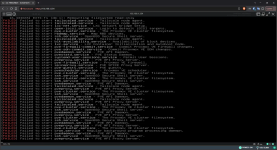
Kkawano-y replied to the thread Proxmox 9 boot issues.Could you please share the output using the forum’s code formatting? This may be related to filesystem errors, an underlying disk or I/O issue, or a storage-driver regression in the newer kernel.
-
gurubert reacted to Johannes S's post in the thread Grundsatzfrage Umstellung ESXi -> Proxmox mit vorhandener SAN Struktur / Wie geht ihr damit um? with Like.
Warum sollte es? ProxmoxVE ist nichts anderes als ein sehr spezielles Linux, da läuft selbstverständlich auch SAN mit. Die eigentliche Frage ist, ob man damit klar kommt, dass die Sachen anders als unter Vmware funktionieren und man nicht...
-
 EllerholdAG replied to the thread Proxmox forum administrators, please increase maximum character count per post from 16KB to 128KB, thanks !.Im not sure your Username does you any favor with this request... Additionally, there is a whole slew of pve Scripts in a separate repository. You could submit it there and let it be reviewed.
 -
EllerholdAG reacted to proxuser77's post in the thread Proxmox forum administrators, please increase maximum character count per post from 16KB to 128KB, thanks ! with Like.
No, I'm against that. If the limit forces people to actually read their AI-generated posts and make them somewhat concise, or clean up their code slop before posting it here, we should definitely leave it as it is. You and your script are living...
-
Ccfkmo replied to the thread Synology NAS in Paperless LXC über Proxmox.Ich habe es nun ein paar Tage mit debian VM auf Proxmox versucht. Der Mount ist auch da - ich sehe, dass die Dateien vom NAS angezeigt werden - aber so richtig funktionieren will es dennoch nicht. Beim mount kommt auch folgende Meldung: Zudem...
-
Ccfkmo replied to the thread Synology NAS in Paperless LXC über Proxmox.Ich habe leider mit Docker und HomeAssistant keine guten Erfahrungen gemacht. Zudem muss man auf einige Features in HA verzichten wenn man es als Docker laufen lässt.
-
G_gabriel replied to the thread PBS on Debian.Debian ext4 installation with PBS datastore as plain folder ext4 like /datastore is easy peasy.
-
Pproxuser77 replied to the thread Proxmox forum administrators, please increase maximum character count per post from 16KB to 128KB, thanks !.No, I'm against that. If the limit forces people to actually read their AI-generated posts and make them somewhat concise, or clean up their code slop before posting it here, we should definitely leave it as it is. You and your script are living...
-
SI have an HPE microserver gen 8 that I just upgrade to version 9 and I get those terrible failures on boot. I initially tried to do a clean install but it showed an error related to GRUB files, so I installed version 8 and then upgraded to 9...
-
-
JJ-Rod replied to the thread Migrate to a new cluster.As a proof of concept, I did go ahead and set up my three-node "test" OptiPlex Micro cluster with one 512GB NVMe consumer SSD and one 800GB Enterprise SATA SSD, mirrored boot, EFI, ZFS and swap partitions, then used the remaining space on each...
-
Pproxuser77 reacted to Onslow's post in the thread Proxmox forum administrators, please increase maximum character count per post from 16KB to 128KB, thanks ! with Like.
I don't want the forum cluttered with posts sized up to 128 KB.
-
SIf you set a custom value it should stay that way and changes to the default will not affect existing ZVOLs either but sure, you can do that. local-zfs is just a storage ID that is, by default, configured to refer to rpool/data.
-
Eernvb replied to the thread Does Proxmox Mail Gateway support FC connection between Synology RS4826xs+ and Dell PowerEdge 660xs?.Thank you very much, guys for the reply and have a blessed day to all, cheers
-
EErnie95 reacted to Impact's post in the thread Memory cgroup out of memory : how to understand it ? with Like.
I'd take a backup/snapshot of the CT and try to execute the script manually with something like this apt -yU install time /usr/bin/time -v bash -x /usr/local/bin/pulse-auto-update.sh That should tell you what it does in some detail and also show...
-
 If you set a custom value it should stay that way and changes to the default will not affect existing ZVOLs either but sure, you can do that. local-zfs is just a storage ID that is, by default, configured to refer to rpool/data.
 -
OOnslow reacted to Impact's post in the thread Memory cgroup out of memory : how to understand it ? with Like.
I'd take a backup/snapshot of the CT and try to execute the script manually with something like this apt -yU install time /usr/bin/time -v bash -x /usr/local/bin/pulse-auto-update.sh That should tell you what it does in some detail and also show...