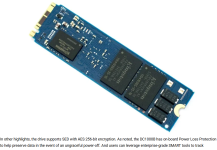
Well, I'm keen to read @IsThisThingOn's reply. Here is my idea:
Without PLP a sync (!) write is delivered to the final storage cell. When the system call returns the final state is reached.
With PLP the data lands in DRAM. The software flow returns to the caller stating "everything is written to disk". Some time after this the data is a) transferred from Ram to the storage cell and b) written there. Both a) and b) may run into an error. I think.
In this picture the pure presence of two additional "hidden" steps after the fact show that there is an additional risk.
That said... of course it is recommended to use PLP nevertheless - for the known reasons and possibly because "Enterprise Class has better quality" - whatever that actually means... ;-)