Wanted an off-site backup that was all-in-one. (PBS & VPN)
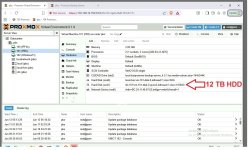
I have built a proxmox backup server (PBS) to take offsite, can work in any location that has wired network. I Put the PBS inside a Proxmox Server where I also installed two other VM's, an IPFire & A Windows or linux. All insitalled an older i7 PC. Also with 2 Nic and a 12TB HDD & s 2TB NVMe drive. Start with loading the proxmox on the 2TB drive. Then the 12TB drive needs to be added, did that as an XFS drive (So it can be passed through to the PBS virtual).
The location to be backed up also has an IPFire (Can be the main hardware IPFire router or a virtual one, it will be the OpenVPN Master). The OpenVPN on the PBS box will be the client. At the main site I setup IPFire as a Net-to-Net Virtual Private Network MASTER, then at the PBS IPFire site I load th client package in as a CLIENT. The master location needs a fixed IP (or you can run DuckDNS to capture the IP address if it's not fixed.)
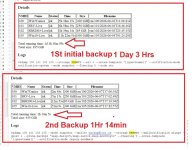
I was surprised how well this works, 1-2 days for the inital backup of just under a Tera Byte. The daily ita around 2 - 2.5 hours backup.
I used a Win11 because I have an AnyDesk account, I can see if it's offline quickly, but there is no need for this to function.
Maybe someone may find this usefull.
And here is the polished up AI Version
Subject: Guide / Success Story: All-in-One Offsite PBS with Integrated IPFire VPN Appliance
Hi everyone,
I wanted to share a successful deployment of an all-in-one, plug-and-play offsite Proxmox Backup Server (PBS) solution. The goal was to build a self-contained box that could be dropped into any remote location with a wired internet connection and automatically establish a secure tunnel back to the primary site.
It has been running smoothly, and I thought the architecture might be useful to anyone looking for a low-cost, robust offsite backup strategy.
Hardware Specification
- Host: Older Intel Core i7 Desktop
- Networking: Dual Gigabit NICs
- Storage 1: 2TB NVMe SSD (Proxmox VE Host OS + Client VMs)
- Storage 2: 12TB HDD (Dedicated for PBS datastore)

Software Architecture & Storage Layout
Instead of installing PBS bare-metal, I installed
Proxmox VE on the 2TB NVMe drive to allow for greater flexibility. Within PVE, I provisioned three virtual machines:
- IPFire VM: Acts as the local gateway and handles the VPN client connection.
- Proxmox Backup Server (PBS) VM: Handles the actual backup deduplication and storage.
- Windows 11 VM: Used purely for remote management and monitoring via AnyDesk (completely optional, but helpful for quick status checks). [1, 2]
Storage Configuration: The 12TB HDD was formatted as
XFS on the PVE host. I then passed this directory through to the PBS virtual machine to use as the primary backup datastore.
Network & VPN Topology (Net-to-Net)
To secure the traffic between the primary site and the offsite backup box, I utilized
IPFire's OpenVPN Net-to-Net capabilities:
- Primary Site (Master): Runs an IPFire instance (can be a dedicated hardware appliance or a VM) configured as the OpenVPN Master. Note: This site requires a static public IP, or a Dynamic DNS solution like DuckDNS to track WAN changes.
- Offsite Box (Client): The virtualized IPFire instance on the backup box is configured as the OpenVPN Client, pre-loaded with the connection package from the Master.
Once plugged into a wired network at the remote site, the client IPFire automatically dials home, establishing a secure Net-to-Net tunnel that bridges the PBS instance directly to the primary cluster.
Performance & Real-World Results
I was incredibly impressed with the efficiency of the PBS deduplication over the VPN tunnel:
- Initial Backup (~1 TB): Took roughly 36 to 48 hours to complete.
- Daily Incremental Backups: Typically finish within 2 to 2.5 hours.
This setup has proven to be highly portable, secure, and incredibly reliable. If anyone is looking to replicate a similar "drop-in" offsite backup appliance, I would be happy to answer any questions about the configuration!



