


Hello,
Using ACME with the Cloudflare DNS plugin, I've configured a PVE node with a Let's Encrypt certificate for pve-host.mydomain.com.
So, adding that PVE node as a single-node remote to PDM was really easy; I didn't have to worry about fingerprints at all.
Except, I still want PDM to be able to talk to the PVE node even if DNS is fried.
Under Remotes > Configuration, under the pve-host remote, I can Edit to add what the Edit window calls Endpoints, but the Remotes > Configuration page calls Nodes. (I think Endpoints is more correct, as a single PVE host can have multiple entries in the list).
Is adding a second endpoint with the IP address of the pve-host.mydomain.com endpoint the correct way to make sure that PDM can access the node even when DNS resolution isn't working?
I'm not sure, since the default is to use the first endpoint, and it doesn't mention anything about failover.
Does it support failover in the event the first endpoint times out?
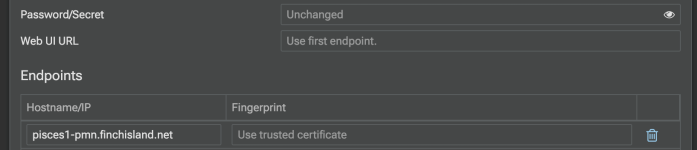
Aside: I'm using the fingerprint from the PVE node's self-signed certificate for the IP address (not shown). That's probably fine?
If PDM doesn't yet support failover in the event of a DNS failure (or rather, a timeout on the first endpoint), I'll remove the second entry and open an enhancement request.
Using ACME with the Cloudflare DNS plugin, I've configured a PVE node with a Let's Encrypt certificate for pve-host.mydomain.com.
So, adding that PVE node as a single-node remote to PDM was really easy; I didn't have to worry about fingerprints at all.
Except, I still want PDM to be able to talk to the PVE node even if DNS is fried.
Under Remotes > Configuration, under the pve-host remote, I can Edit to add what the Edit window calls Endpoints, but the Remotes > Configuration page calls Nodes. (I think Endpoints is more correct, as a single PVE host can have multiple entries in the list).
Is adding a second endpoint with the IP address of the pve-host.mydomain.com endpoint the correct way to make sure that PDM can access the node even when DNS resolution isn't working?
I'm not sure, since the default is to use the first endpoint, and it doesn't mention anything about failover.
Does it support failover in the event the first endpoint times out?
Aside: I'm using the fingerprint from the PVE node's self-signed certificate for the IP address (not shown). That's probably fine?
If PDM doesn't yet support failover in the event of a DNS failure (or rather, a timeout on the first endpoint), I'll remove the second entry and open an enhancement request.


