

Hello everybody,
I am just wondering, whether I can improve my guest's performance in any way:
I got a SSD-RAID (10) on `/dev/sda` which provides the local storage for my KVM guests.
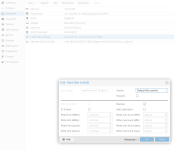
A typical guest comes with these settings:
This is /etc/fstab
So in the "good old days" it was kinda "best practice" to set noatime to the filesystem to tell the OS not to write the date of last access.
My questions:
- Is this hint still "best practice" in times of SSDs?
- Which changes would you recommend in order to improve SSD speed? Of course I don't want an unsafe scenario.
I am just wondering, whether I can improve my guest's performance in any way:
I got a SSD-RAID (10) on `/dev/sda` which provides the local storage for my KVM guests.
A typical guest comes with these settings:
This is /etc/fstab
Code:
# /etc/fstab: static file system information.
#
# Use 'blkid' to print the universally unique identifier for a
# device; this may be used with UUID= as a more robust way to name devices
# that works even if disks are added and removed. See fstab(5).
#
# <file system> <mount point>   <type>  <options>       <dump>  <pass>
/dev/mapper/vg00-root /               ext4    errors=remount-ro 0       1
# /boot was on /dev/vda1 during installation
UUID=2489960f-09a8-4d17-aa1a-7f2bd0e74541 /boot           ext2    defaults        0       2
/dev/mapper/vg00-swap_1 none            swap    sw              0       0
So in the "good old days" it was kinda "best practice" to set noatime to the filesystem to tell the OS not to write the date of last access.
My questions:
- Is this hint still "best practice" in times of SSDs?
- Which changes would you recommend in order to improve SSD speed? Of course I don't want an unsafe scenario.

 Some advanced tuning can of course always be done for special workloads, but that's something you need to figure out based on what you're doing with your VMs.